Site Title

  • There are certain places in the world that make you pause, breathe, and feel like nature itself is speaking to you. The Sundarbans, the world’s largest mangrove forest, is one of those places. Stretching across India and Bangladesh, this UNESCO World Heritage Site isn’t just a forest—it’s a living, breathing ecosystem that thrives on the harmony between land, water, and wildlife.

    Whether you’re an adventurer, a nature lover, or someone simply looking to escape the noise of city life, planning a trip here will give you more than just a holiday—it’ll give you stories you’ll cherish forever. That’s the essence of Sundarban travels.


    The Enchanting Mangrove Landscape

    Picture this: winding rivers splitting the forest into countless islands, the sun casting a golden glow on the water, and the sound of boat engines slowing down as you drift deeper into silence. The mangrove roots rise like sculptures from the water, and with every turn, you’re reminded that this is no ordinary jungle.

    The Sundarbans are a maze of waterways, creeks, and dense greenery. The landscape shifts with the tides, which means no two visits are ever the same. It’s the perfect place for travelers who crave something more than static sightseeing—it’s about watching a living ecosystem constantly in motion.


    Meeting the Royal Bengal Tiger (From a Distance)

    The biggest star of the Sundarbans is, without doubt, the elusive Royal Bengal Tiger. Unlike tigers in other parts of India, these are expert swimmers. Imagine spotting paw prints along a muddy bank, knowing that one of the world’s most majestic predators may be watching you from deep inside the trees.

    Of course, the forest isn’t only about tigers. You’ll also find saltwater crocodiles basking in the sun, fishing cats prowling near the edges, and countless birds filling the air with their calls. Birdwatchers in particular will be delighted by the variety—from kingfishers flashing their colors across the creeks to rare species like the masked finfoot.


    Why Travel Here Feels Different

    A journey to the Sundarbans is not like your typical vacation. You don’t just hop into a car, take a few photos, and move on. Most of your time is spent on boats, gliding over rivers that connect villages, forests, and wildlife.

    The people here live in close connection with nature. Fishermen cast their nets at sunrise, honey collectors venture into the forests risking their lives, and small villages survive on what the river gives them. Spending even a day in this environment makes you realize how resilient and resourceful human life can be when tied so closely to the rhythms of nature.


    Best Experiences to Try

    If you’re considering a trip, here are a few things you absolutely shouldn’t miss:

    • Boat Safaris – The heart of the Sundarbans experience. These range from half-day rides to multi-day cruises with night stays on houseboats.
    • Village Walks – Get a glimpse into the lives of locals, their traditions, and their connection with the forest.
    • Birdwatching Tours – Early mornings are the best time to catch rare sightings.
    • Local Cuisine – From fresh river fish to spicy curries, the flavors here are deeply tied to the land and water.

    When to Visit

    The Sundarbans are beautiful year-round, but winter (November to February) is the most popular season. The weather is pleasant, the chance of spotting wildlife is higher, and the rivers feel calmer. The monsoon months bring their own magic, with lush greenery and roaring rivers, though travel can be more challenging.


    Responsible Travel Matters

    This region is fragile, and tourism needs to be mindful. Always travel with licensed guides, avoid littering, and respect the silence of the forest. The communities here rely on eco-tourism for income, so choosing local operators helps preserve both nature and livelihoods.


    Why It Stays With You

    What makes the Sundarbans unforgettable isn’t just its wildlife or landscapes. It’s the sense of mystery—the feeling that you’re entering a world where humans aren’t in charge, but guests. There’s awe in spotting a tiger’s shadow, peace in watching a sunset over endless rivers, and joy in sharing a meal with villagers who welcome you with warmth.

    In a time when travel often feels rushed and commercial, the Sundarbans remind us what slow, soulful journeys feel like. They remind us to listen, to observe, and to appreciate life’s raw beauty.


    Final Thoughts

    If you’re planning your next getaway and want something different—something that blends adventure, culture, and deep natural beauty—set your sights on the Sundarbans. Traveling here isn’t just about ticking off a destination; it’s about experiencing a way of life that’s rare in today’s world.

  • When people talk about India’s natural wonders, the Sundarbans always comes up as one of the most mysterious and enchanting places. Spread across India and Bangladesh, this UNESCO World Heritage Site is not only the world’s largest mangrove forest but also the home of the famous Royal Bengal Tiger. If you’re planning an escape from the hustle and bustle of city life, choosing a Sundarban tour package is one of the smartest and most convenient ways to explore this magical land.


    The Allure of the Sundarbans

    The Sundarbans is a world like no other. Imagine cruising through narrow rivers surrounded by thick mangroves, hearing the calls of exotic birds, and watching playful dolphins glide alongside your boat. This isn’t your everyday vacation—it’s an adventure wrapped in nature’s mystery.

    What makes the Sundarbans even more special is its wildlife. Besides the elusive tigers, it’s also home to saltwater crocodiles, spotted deer, wild boars, snakes, and over 250 species of birds. The atmosphere feels untouched, raw, and thrilling—perfect for anyone who craves an authentic travel experience.


    Why Choose a Tour Package?

    A big question for many travelers is whether to plan everything on their own or opt for a ready-made plan. With a Sundarban tour package, you get the benefit of a hassle-free journey. Everything—from transportation, meals, boat rides, to accommodation—is taken care of. This allows you to relax and fully immerse yourself in the experience.

    Think about it: instead of worrying about ferry timings, permits, or where to stay, you’ll have a local team guiding you every step of the way. They know the region, understand the tides, and can take you to the best spots for wildlife viewing. It’s like having a personal key to unlock the mysteries of the Sundarbans.


    A Glimpse of What You’ll Experience

    Most packages begin from Kolkata, where travelers are transported to Godkhali—the gateway to the Sundarbans. From there, your adventure truly begins on a boat. Over the next few days, you’ll cruise through winding rivers like Bidya, Durgadooni, and Malta, each offering breathtaking scenery.

    You’ll visit watchtowers such as Sudhanyakhali and Sajnekhali, famous for tiger and bird sightings. Cultural experiences are often included too—you might get to see a local folk performance, taste authentic Bengali cuisine, or visit nearby villages to understand the lifestyle of the people living in this fragile ecosystem.

    And of course, nothing compares to that magical moment when you spot a tiger swimming across the river or walking along the muddy banks. Even if you don’t see one, the anticipation itself creates unforgettable excitement.


    Social-Friendly Moments

    Let’s face it—half the joy of travel these days is sharing your experiences with friends and followers. The Sundarbans is incredibly photogenic. From sunrise over the mangroves to the colorful boats dotting the rivers, every angle feels like it belongs on Instagram.

    A Sundarban tour package often includes sunrise and sunset cruises, giving you those golden-hour shots that make your social posts pop. Don’t forget to capture the candid moments too: villagers weaving fishing nets, kids playing near the river, or flocks of migratory birds flying overhead. These glimpses of local life add authenticity to your travel story.


    Tips for Making the Most of Your Trip

    1. Pack Light, but Smart – Comfortable clothes, sunglasses, sunscreen, and mosquito repellent are must-haves.
    2. Stay Eco-Friendly – Remember, this is a delicate ecosystem. Avoid plastic and dispose of waste responsibly.
    3. Keep Your Camera Ready – Wildlife sightings happen in the blink of an eye. A zoom lens or binoculars can make a big difference.
    4. Soak in the Experience – Don’t spend all your time behind the lens. Take a moment to just breathe, listen, and enjoy the tranquility.

    Who Should Go?

    The Sundarbans is perfect for nature lovers, wildlife photographers, families seeking adventure, and even solo travelers who want something unique. Whether you’re a seasoned traveler or someone taking their first step into eco-tourism, there’s something for everyone.

    Couples often find it romantic—imagine watching the sun set over the river while floating on a quiet boat. Families love the educational side, as kids get to see nature up close. And adventurers? Well, nothing beats the thrill of being in tiger territory!


    Final Thoughts

    The Sundarbans is not just a destination—it’s an experience that stays with you long after the trip is over. From the mysterious mangroves to the vibrant local culture, every moment feels like a discovery. Choosing a Sundarban tour package makes it easier to dive into this world without stress, ensuring you don’t miss the highlights while still leaving space for those spontaneous, magical moments.

  • In the ever-evolving digital age, conversations about lifestyle, relationships, and companionship have expanded far beyond the private sphere. What was once whispered behind closed doors is now discussed more openly on social platforms, forums, and blogs. Jyoti Park, a well-known locality in Gurgaon, has become one such place where discussions about modern companionship and nightlife often spark curiosity. One phrase that frequently pops up in these conversations is Call Girls In Jyoti Park a keyword that tends to draw both attention and debate.

    But beyond the obvious intrigue, what does this say about society, relationships, and how we interact with our environments? Let’s take a step back and look at the larger picture.


    The Growing Transparency in Conversations

    Social media has changed how we perceive and discuss sensitive topics. A decade ago, the mention of anything related to adult companionship would have been avoided in public forums. Today, with increasing openness in digital spaces, people feel freer to express curiosity or share experiences.

    For areas like Jyoti Park, this trend reflects how urban neighborhoods are not just residential hubs but also social ecosystems. People living here are part of a modern, digital-first generation that values authenticity and openness. When topics like companionship are raised online, they often lead to wider discussions about relationships, emotional needs, and the pursuit of connection.


    Lifestyle and Urban Dynamics

    Jyoti Park is not just about nightlife—it’s a community filled with working professionals, families, and students. Its location in the heart of Gurgaon places it at the intersection of rapid urban development and traditional social structures.

    With shopping complexes, dining options, and entertainment zones nearby, it’s a place that attracts a diverse crowd. This diversity also creates space for different kinds of services and social interactions. Whether people are looking for a lively evening out or simply a casual coffee meet-up, the area has something for everyone.

    The mention of companionship services in relation to Jyoti Park should therefore be seen as just one aspect of a larger urban story—where personal freedom and lifestyle choices intersect with the realities of modern city life.


    Beyond the Keyword: Human Connection

    Whenever the topic of companionship services arises, it’s easy to focus only on the commercial side. But at the core of these conversations lies something much more human: the desire for connection.

    In today’s fast-paced world, loneliness is an increasing concern. Many professionals working long hours in Gurgaon’s corporate towers find little time to build or maintain relationships. This gap often leads people to seek companionship in different forms—some temporary, others more lasting.

    Understanding this perspective shifts the focus from judgment to empathy. After all, relationships—whether romantic, platonic, or fleeting—have always been an essential part of human experience.


    The Role of Social Media Narratives

    Platforms like Instagram, Facebook groups, and discussion boards have amplified conversations around Jyoti Park and similar areas. Memes, casual posts, and anonymous confessions bring humor and relatability to topics that were once considered taboo.

    This cultural shift shows how younger generations are reframing narratives. Instead of avoiding difficult conversations, they’re finding creative ways to express opinions—sometimes through satire, sometimes with raw honesty.


    Safety, Respect, and Responsibility

    While curiosity and openness are natural, it’s equally important to talk about safety and respect. Any form of companionship—whether arranged socially, romantically, or professionally—should always prioritize consent, dignity, and well-being.

    For communities like Jyoti Park, this means creating a safe environment where individuals feel respected, no matter what lifestyle choices they make. Conversations around companionship should therefore go hand-in-hand with promoting awareness about safety, personal boundaries, and mutual respect.


    Changing Social Attitudes

    India’s urban culture is evolving rapidly. What was once considered shameful is now discussed with nuance. Cities like Gurgaon, with areas such as Jyoti Park, represent the changing mindset of an entire generation—balancing tradition with modernity, privacy with transparency.

    The fact that people are willing to openly type, search, and discuss keywords like this online signals a shift. It shows that society is slowly moving towards less judgment and more understanding, especially in matters of personal freedom.


    Conclusion

    Jyoti Park isn’t just a location—it’s a reflection of the broader cultural and social changes sweeping across Indian cities. The presence of discussions around companionship, lifestyle, and nightlife speaks to the dynamic energy of the area. While keywords like Call Girls In Jyoti Park grab attention, the deeper conversation is about how people connect, what they seek, and how urban spaces are adapting to modern needs.

    As society continues to evolve, it’s important to foster open yet responsible dialogue. At the end of the day, it’s not just about services or nightlife—it’s about people, emotions, and the ever-changing ways we find connection in the modern world.

  • Hans Enclave has quickly become one of the most talked-about destinations for modern living, offering a vibrant mix of lifestyle, comfort, and social experiences. Among the conversations surrounding the area, one topic that often comes up is Call Girls In Hans Enclave. While it may sound controversial at first glance, it’s important to approach this subject with an open mind and an understanding of the broader social context.

    Changing Perspectives on Urban Lifestyle

    In today’s urban culture, companionship has taken many forms. People living in busy cities often feel the need for emotional connection, social engagement, and relaxation after long work hours. The presence of Call Girls In Hans Enclave is often discussed in this light—not just as a service, but also as a reflection of changing attitudes toward personal freedom and lifestyle choices.

    Safety & Professionalism

    One of the reasons this subject is openly discussed in Hans Enclave is the emphasis on safety and professionalism. Many platforms that mention Call Girls In Hans Enclave highlight trust, discretion, and respect. This allows individuals to feel more comfortable when exploring companionship options without the fear of judgment or social stigma.

    A Part of the Social Fabric

    Rather than viewing this simply as a taboo topic, residents and visitors are beginning to see it as part of the broader lifestyle culture in the enclave. Just as people seek entertainment through restaurants, lounges, and nightlife, the conversations around Call Girls In Hans Enclave underline the importance of choice and personal freedom in a progressive society.

    Final Thoughts

    Hans Enclave continues to grow as a hub for modern living. As the area evolves, discussions about nightlife, lifestyle, and companionship will always remain. Whether someone chooses to explore Call Girls In Hans Enclave or not, what truly matters is respect, safety, and an understanding that everyone’s lifestyle preferences are different.

  • In today’s fast-paced and often isolating world, the need for companionship has taken on new meaning. People are constantly juggling demanding jobs, family responsibilities, and personal ambitions, leaving little room for genuine connection. As a result, many turn to alternative ways of finding emotional and social fulfillment. This shift has sparked conversations around companionship, social relationships, and how services built around human connection play a role in urban life.

    The Modern Urban Lifestyle

    Living in a city means endless opportunities, but it also comes with challenges. While bustling markets, vibrant nightlife, and busy streets bring excitement, they also create environments where loneliness can creep in. People may be surrounded by thousands every day yet still feel alone. This contrast has given rise to a growing acceptance of companionship services — not merely as transactional but as a bridge to meaningful social interaction.

    When someone searches for Call Girls in Arjun Nagar, it’s not always about the obvious assumption. For many, it’s also about finding someone to share time with, to talk to, and to ease the weight of solitude. These interactions, while professional in nature, can often feel refreshingly personal.

    A Changing Perspective on Companionship

    For decades, society looked at escort or companionship services with skepticism, largely due to cultural stigmas. However, in recent years, perspectives have shifted. Younger generations, particularly those living independently in metropolitan areas, view companionship through a more open and pragmatic lens.

    The shift is driven by several factors:

    • Busy lifestyles: Work schedules rarely leave room for traditional dating.
    • Safety and choice: Many feel more comfortable engaging with professional services where boundaries are clear.
    • Emotional support: Sometimes, all someone needs is a listening ear or a partner for a dinner event.

    When people consider options like Call Girls in Ashok Vihar, they are often seeking more than physical connection — they’re looking for comfort, confidence, and in some cases, the ease of having a trustworthy companion by their side.

    The Social Dimension

    Another aspect worth noting is how companionship services have moved into mainstream conversations. Social media, movies, and pop culture have normalized these topics to an extent, allowing for more transparent discussions. This normalization has encouraged people to explore what companionship means to them personally, without being weighed down by judgment.

    Many individuals share that engaging in these services has improved their confidence in social settings. Whether it’s practicing conversation, learning how to carry oneself in public, or simply feeling valued, companionship becomes more than just a meeting — it’s an experience that can leave a positive mark.

    Safety, Respect, and Boundaries

    An essential part of any professional companionship service is the emphasis on mutual respect and safety. Both clients and companions set clear expectations before meeting, ensuring that boundaries are respected on both sides. This framework allows the experience to be fulfilling without misunderstandings.

    In cities, where trust can sometimes be hard to establish quickly, having services that prioritize safety gives individuals peace of mind. Companionship then becomes less about risk and more about comfort.

    Emotional Well-being and Human Connection

    Loneliness is a growing issue worldwide, even in countries with advanced economies and social structures. Human beings are wired for connection, and when that need isn’t met, it can lead to stress, anxiety, or depression. Companionship services, though unconventional in the eyes of some, provide a vital outlet for people to reconnect with themselves and others.

    It’s not unusual for someone to book a companion simply for a movie night, a walk, or even a deep conversation over coffee. These small but meaningful interactions highlight that what people truly crave is a sense of being seen and heard.

    Looking Ahead

    The way society views companionship will continue to evolve. What was once considered taboo is slowly becoming normalized, particularly in diverse and dynamic cities. The focus is shifting away from judgment and more toward empathy — recognizing that everyone’s needs are unique.

    In the years to come, companionship services will likely expand further into lifestyle and wellness spaces. Instead of being a topic whispered about, they might very well be openly discussed as another facet of social well-being.

    Final Thoughts

    Companionship is, at its core, about human connection. Whether in a small neighborhood, a bustling city, or a quiet residential area, the desire to feel close to someone is universal. People might explore this through traditional relationships, friendships, or professional services, but the essence remains the same: everyone wants to feel valued, respected, and cared for.

    The conversations around companionship are moving in a positive direction — toward openness, inclusivity, and understanding. By embracing this shift, we acknowledge that human connection is not a luxury, but a necessity in today’s world.

  • Badminton is one of the most exciting and accessible sports in the world. Whether you’re playing casually in your backyard or competing in a professional tournament, understanding the badminton court area, badminton court measurement is essential. The size and layout of the court affect not only how you play but also the fairness and flow of the game.

    In this guide, we’ll break down the official measurements, why they matter, and a few tips for setting up your own court.


    Why Court Size Matters in Badminton

    You might think, “It’s just a rectangle with a net in the middle—how complicated can it be?” Well, the beauty of badminton lies in precision. The badminton court area, badminton court measurement are designed to ensure that every player, no matter their skill level, plays under fair and consistent conditions.

    Too small of a court, and rallies become cramped. Too large, and you’re running marathons just to hit the shuttlecock. That’s why the Badminton World Federation (BWF) has set clear international standards.


    Official Badminton Court Area and Measurement

    A standard badminton court is rectangular and is divided into halves by a central net. Here’s what the official numbers look like:

    • Total length: 13.4 meters (44 feet)
    • Total width for doubles: 6.1 meters (20 feet)
    • Width for singles: 5.18 meters (17 feet)
    • Net height at the center: 1.524 meters (5 feet)
    • Net height at the posts: 1.55 meters (5 feet 1 inch)

    The badminton court area in square meters is about 81.74 m² for doubles and around 69.4 m² for singles. These measurements include clear boundary lines that are part of the playing area.


    Understanding the Markings

    When you step onto a badminton court, you’ll notice several lines. They’re not just there to confuse you—they have specific purposes:

    1. Sidelines for singles and doubles – Singles use the narrower sidelines; doubles use the wider ones.
    2. Baseline (or back boundary line) – Marks the farthest back you can serve or hit the shuttle.
    3. Service lines – There are short service lines and long service lines to determine where a serve must land.
    4. Center line – Splits the service courts into left and right halves.

    Every line is 40mm wide, and the thickness is included in the badminton court measurement.


    Indoor vs. Outdoor Badminton Court Area

    Most professional matches are played indoors to avoid wind interference. However, if you’re playing casually outdoors, you can still follow the same badminton court measurement for a balanced game. Just be aware that shuttlecocks behave differently in windy conditions, so rallies might feel faster or more unpredictable.


    Flooring and Surface

    The badminton court area isn’t just about dimensions—it’s also about the surface. The best courts have wooden or synthetic mats that provide good grip and shock absorption. Playing on slippery or overly hard surfaces can increase the risk of injury.

    If you’re creating a court at home, consider a non-slip mat and mark lines with tape that can be easily removed without damaging the floor.


    Tips for Setting Up Your Own Court

    If you have the space, here’s how to make your DIY badminton court feel professional:

    1. Measure twice, mark once – Use a reliable tape measure to get the exact badminton court measurement.
    2. Choose the right net height – Even a small difference can affect gameplay.
    3. Use clear boundary markings – Bright tape or paint works best for visibility.
    4. Mind the surroundings – Keep at least 1 meter of clear space around the court for safety.

    Fun Fact: Why the Lines Are So Precise

    You might wonder why the badminton court area, badminton court measurement have to be so exact. The reason is that badminton is a game of inches—sometimes millimeters. A shuttlecock traveling at over 300 km/h can land right on the line, and a slight change in court size could alter match outcomes.


    Conclusion

    Knowing the badminton court area, badminton court measurement isn’t just trivia—it’s a key part of enjoying the sport to the fullest. Whether you’re a beginner or a seasoned player, a well-measured court ensures fair play, improves your skills, and makes the game far more enjoyable.

    So next time you pick up a racket, take a moment to appreciate the precision under your feet. Because in badminton, every centimeter counts.

  • Badminton is one of the fastest-growing sports worldwide, and it’s easy to see why. It’s exciting, fast-paced, and can be enjoyed by players of all ages. Whether you’re building a court for a school, sports club, or your own backyard, there are two important factors to consider before you start: the type of court surface and the badminton court size.

    In this guide, we’ll walk you through why a synthetic badminton court is a smart choice, what makes it different from other surfaces, and the official badminton court size to ensure you’re playing the game the right way.


    Why Choose a Synthetic Badminton Court?

    Traditionally, badminton courts were made from wooden flooring. While wood offers a classic look, it comes with higher maintenance needs and can be less durable in certain climates. That’s where a synthetic badminton court comes in.

    Benefits of a Synthetic Court Surface:

    1. Durability – Synthetic surfaces are built to last. They can handle heavy use without showing wear and tear as quickly as wooden or cement courts.
    2. Low Maintenance – Forget regular polishing and heavy upkeep. A synthetic badminton court only needs basic cleaning to stay in top shape.
    3. Better Grip & Shock Absorption – Synthetic materials provide excellent traction, reducing the risk of slips while cushioning players’ joints during high-intensity games.
    4. Weather Resistance – Unlike wood, synthetic surfaces are not as easily damaged by humidity or temperature changes, making them perfect for both indoor and covered outdoor courts.

    Because of these benefits, many sports academies, schools, and professional arenas are making the switch to synthetic flooring.


    Understanding the Official Badminton Court Size

    While having the right surface is essential, the dimensions of your court are just as important. An incorrectly sized court can affect gameplay and may not meet competition standards.

    According to the Badminton World Federation (BWF), the official badminton court size for doubles play is:

    • Length: 13.4 meters (44 feet)
    • Width: 6.1 meters (20 feet)

    For singles matches, the width is slightly narrower:

    • Length: 13.4 meters (44 feet)
    • Width: 5.18 meters (17 feet)

    Other key measurements include:

    • Net Height: 1.55 meters (5 feet 1 inch) at the edges and 1.524 meters (5 feet) in the center.
    • Service Lines: Positioned 1.98 meters (6 feet 6 inches) from the net for doubles, and a long service line 0.76 meters (2 feet 6 inches) from the back boundary for singles.

    By sticking to these official dimensions, you ensure fair gameplay and make it easier for players to transition between friendly matches and professional competitions.


    Indoor vs. Outdoor Considerations

    When installing a synthetic badminton court, you need to think about whether it will be indoors or outdoors.

    • Indoor Courts – Ideal for consistent conditions, avoiding wind or rain interference. Synthetic flooring works perfectly indoors, providing a professional playing experience year-round.
    • Covered Outdoor Courts – If you’re short on space indoors, you can opt for a roofed outdoor court with synthetic flooring. This way, you still protect players from direct sun and rain while maintaining good surface quality.

    Keep in mind that outdoor courts may require additional care to prevent dust buildup, which can affect grip.


    Cost and Installation

    The price of a synthetic badminton court varies depending on material quality, thickness, and brand. While synthetic flooring may cost more initially compared to cement or wood, its durability and low maintenance often make it more cost-effective in the long run.

    Installation should always be handled by professionals to ensure the court is level, markings are accurate, and the surface is properly secured. Poor installation can lead to uneven bounce, slippery spots, or even injuries.


    Tips for Maintaining Your Synthetic Court

    Even though synthetic surfaces are low maintenance, a little care goes a long way:

    • Sweep the court regularly to remove dust and debris.
    • Avoid using harsh chemicals that could damage the surface.
    • Keep shoes clean before stepping on the court to maintain grip quality.
    • Inspect lines and markings periodically to ensure they remain visible.

    Final Thoughts

    Whether you’re building a recreational facility or setting up a court for competitive play, the combination of a synthetic badminton court and correct badminton court size will give players the best experience possible.

    Synthetic surfaces offer durability, safety, and comfort, while following official dimensions ensures fair play and professionalism. In the long run, this combination not only enhances the game but also saves you money and effort in maintenance.

    Badminton is more than just a sport—it’s a community activity, a fitness booster, and a source of endless fun. By investing in the right court, you’re helping that community grow stronger, one match at a time.

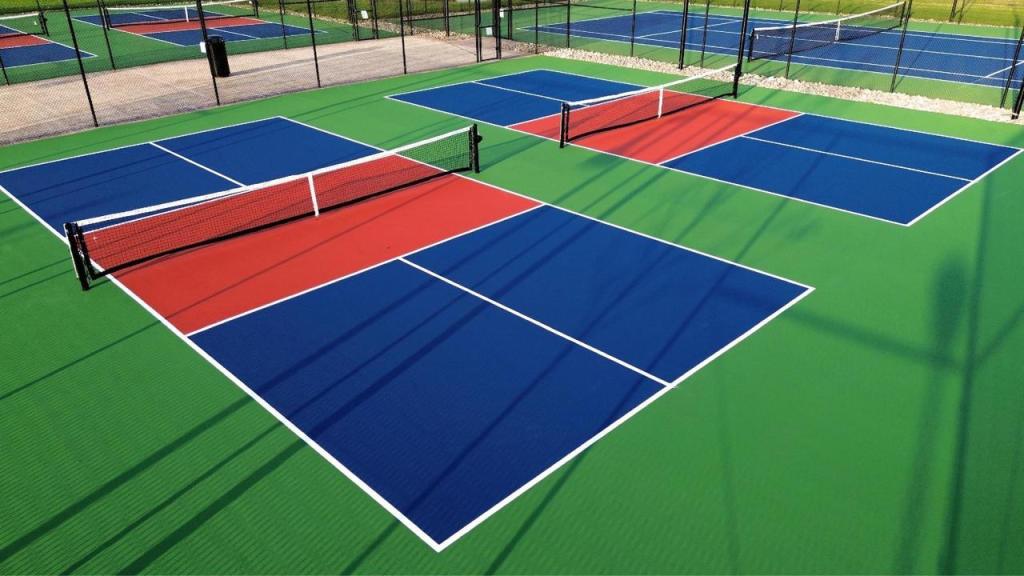
  • If you’ve been anywhere near a community park, recreation center, or sports club lately, you’ve probably seen it: paddles in hand, players laughing, and a little yellow ball zipping across the court. Pickleball—the fun, fast-growing sport that blends elements of tennis, badminton, and ping pong—has become a social and athletic phenomenon. But behind every great game is a great playing surface, and that’s where pickleball court makers step in.

    Why Pickleball Is Booming

    Pickleball’s popularity has skyrocketed in recent years for one simple reason—it’s fun for everyone. It’s easy to learn, doesn’t require extreme athleticism, and can be enjoyed by kids, adults, and seniors alike. Unlike some sports that take years to master, most people can pick up the basics in a single afternoon. The courts are smaller than tennis courts, meaning less running and more opportunities for friendly rallies and conversation.

    However, the quality of the court can make or break the playing experience. That’s why pickleball court makers  are now in high demand across the country.

    The Role of Professional Court Makers

    Building a pickleball court isn’t just about painting some lines on asphalt and calling it a day. Professional pickleball court makers understand the nuances that create an excellent playing surface. They take into account factors like:

    • Surface material – Whether it’s asphalt, concrete, or a cushioned acrylic surface, the material affects ball bounce, player comfort, and long-term durability.
    • Court dimensions – Pickleball has very specific court measurements (20 feet wide by 44 feet long for doubles play). Precision ensures fair and competitive matches.
    • Net installation – A regulation net is 36 inches high at the sidelines and 34 inches in the middle. Getting this right is essential.
    • Line visibility – Clear, non-slippery paint ensures players can see boundaries without risk of slipping.

    The best pickleball court makers also consider location, drainage, and sun positioning to make sure the court is enjoyable to play on year-round.

    Customizing the Pickleball Experience

    Many communities and private homeowners aren’t just looking for standard courts anymore. They want personalized spaces that reflect their style or serve multiple sports. Skilled pickleball court makers can install multi-use courts that accommodate both pickleball and tennis, or even basketball, by using clever line patterns and removable nets.

    Customization might also include adding windscreens, spectator seating, court lighting for night play, and vibrant color schemes that make the game feel even more inviting.

    The Social Side of Court Making

    Pickleball isn’t just a sport—it’s a social connector. Entire neighborhoods have been revitalized by the simple addition of a new court. Professional pickleball court makers often work closely with local parks departments, schools, and retirement communities to create spaces that encourage connection, fitness, and fun.

    Some towns have even turned court construction into community events, where residents can watch the progress, meet the builders, and learn more about the sport. Once the courts are finished, opening-day tournaments and socials help introduce newcomers and create a welcoming atmosphere.

    Why DIY Isn’t Always the Best Option

    While it’s possible to make a temporary pickleball court with some tape and a portable net, long-term solutions require expertise. Poor construction can lead to uneven surfaces, incorrect measurements, or drainage issues that make the court unusable after rain.

    Professional pickleball court makers not only ensure the court meets official standards but also build it to last. They use high-quality materials, proper installation techniques, and protective coatings to withstand years of play.

    The Future of Pickleball Court Design

    As pickleball continues to grow, so does innovation in court building. Some pickleball court makers are experimenting with eco-friendly materials, solar-powered lighting, and modular court systems that can be installed indoors or outdoors and moved as needed.

    Others are integrating technology, like built-in cameras for instant replay or smart nets that can track scores and stats automatically. This mix of tradition and modern convenience is likely to attract even more people to the sport in the years ahead.

    Final Thoughts

    Pickleball might be known for its laughter and laid-back style, but behind every game is careful planning and professional craftsmanship. Pickleball court makers are the unsung heroes of the sport, transforming empty spaces into vibrant hubs of activity. Whether you’re a casual weekend player or a dedicated competitor, having a well-made court makes the game safer, more enjoyable, and a whole lot more fun.

  • In the vast and colorful world of numbers, patterns, and chance, Matka guessing has carved out a unique space—especially in South Asian gaming culture. What started as a simple pastime decades ago has evolved into an organized system of number prediction, blending elements of skill, observation, and, of course, a dash of luck.

    If you’ve heard the term but aren’t exactly sure what it means, you’re not alone. This article will walk you through the history, concept, methods, and the modern-day appeal of Matka guessing—without overcomplicating things.


    The Origins of Matka

    Matka, also known as Satta Matka, originally began in the 1960s as a way to bet on the opening and closing rates of cotton sent from the New York Cotton Exchange to the Bombay Cotton Exchange. Over time, it evolved into a number-based lottery-style game where participants choose numbers and hope their selection matches the results.

    The term “Matka” literally means “earthen pot,” which was traditionally used to draw numbers in early versions of the game. This simple yet exciting process sparked what would later become one of the most popular forms of informal betting in India.


    What is Matka Guessing?

    At its core, Matka guessing is the art (or science, depending on how you see it) of predicting the numbers that might appear in a Matka draw. While luck is undeniably a factor, many enthusiasts believe that with enough observation, pattern recognition, and statistical analysis, predictions can be improved.

    It’s not just about picking random numbers—players often study past results, look for trends, and use various strategies to narrow down possibilities. For some, it’s a mental challenge; for others, it’s pure entertainment.


    How People Approach Matka Guessing

    1. Studying Historical Data
      Many players keep detailed records of past draws. By looking at this data, they try to spot recurring numbers or sequences. While it’s never a guarantee, they believe history sometimes “rhymes” in number draws.
    2. Mathematical Formulas
      Some enthusiasts apply probability theory, arithmetic patterns, or custom formulas to arrive at their guesses.
    3. Intuitive Picking
      Others go by instinct, lucky numbers, or personal milestones like birthdays or anniversaries.
    4. Community Sharing
      In the digital age, many forums and groups share Matka guessing tips, where players exchange insights and number predictions. This adds a social element to the game, turning it into a collaborative guessing sport.

    Why People Enjoy Matka Guessing

    • Excitement: The suspense of waiting for results makes the game thrilling.
    • Mental Engagement: For those who love puzzles and challenges, finding patterns in numbers is intellectually satisfying.
    • Community Connection: Many players are part of social circles or online groups that bond over discussing guesses and results.

    The Modern Twist

    With the internet, Matka guessing has moved from street corners and paper slips to mobile screens and online forums. Websites and apps provide historical data, prediction tools, and even AI-assisted guessing features. However, while the format has gone digital, the essence—trying to outwit randomness—remains the same.


    A Note on Responsibility

    While Matka guessing can be a fun mental exercise, it’s important to remember that it often involves gambling in some form. Gambling can be addictive and may have legal restrictions depending on your location. Anyone participating should approach it with caution, set clear limits, and treat it as entertainment rather than a source of income.


    Tips for Responsible Participation

    1. Know the Rules: Make sure you understand how the game works before you start.
    2. Set a Budget: Never risk money you can’t afford to lose.
    3. Play for Fun: Enjoy the guessing process instead of focusing solely on winning.
    4. Avoid Chasing Losses: Accept that losing is part of the game.
    5. Stay Legal: Check the gambling laws in your area before playing.

    Final Thoughts

    Matka guessing isn’t just about numbers—it’s about the stories, traditions, and communities built around a shared fascination with chance. Whether you approach it with meticulous analysis or playful curiosity, remember that the most important thing is to keep the experience enjoyable and safe.

    In the end, the magic of Matka guessing lies not just in the win, but in the anticipation, the friendly debates over possible outcomes, and the shared moments with fellow enthusiasts. Numbers may be random, but the human connection they spark is anything but.

  • If you’re an Audi enthusiast, you already know that the RS6 C8 is a masterpiece of performance engineering. Its 4.0-liter twin-turbo V8 delivers exhilarating power, but for those who crave even more, upgrading the downpipes is a game-changer. In this article, we’ll explore the difference between audi rs6 c8 downpipes catless and catted, how they affect performance, sound, and emissions, and which might be right for you.


    What Are Downpipes and Why Upgrade Them?

    A downpipe is a section of exhaust piping that connects the turbochargers to the rest of the exhaust system. In stock form, the RS6 C8’s downpipes are fitted with restrictive catalytic converters designed to reduce emissions but also limit exhaust flow.

    Upgrading to performance downpipes—whether catless or catted—reduces backpressure, allowing exhaust gases to exit more quickly. This helps the turbos spool faster, increasing horsepower and torque while enhancing throttle response.


    Catless vs. Catted: The Basics

    When talking about audi rs6 c8 downpipes catless and catted, the key difference lies in the catalytic converter setup.

    • Catless Downpipes
      These have no catalytic converters at all. The absence of restrictions means maximum exhaust flow, improved turbo efficiency, and the most aggressive sound possible. The car will have a raw, motorsport-like tone that’s hard to ignore.
    • Catted Downpipes
      These retain a high-flow catalytic converter. While less restrictive than stock, they still filter exhaust gases to reduce harmful emissions. You’ll get a performance boost, a deeper exhaust note, and fewer issues with inspections or emissions compliance in certain regions.

    Performance Gains

    Upgrading to either option can yield noticeable performance improvements.

    • Catless Downpipes often provide the highest gains, typically unlocking 20–40 extra horsepower (with proper tuning) due to zero restriction. Turbo lag is reduced, and the car feels more responsive across the rev range.
    • Catted Downpipes still deliver significant gains—usually 15–30 horsepower—while offering a more refined sound and keeping emissions equipment in place.

    The real magic happens when you pair either with an ECU tune designed for high-flow exhaust components. This combination can unleash the RS6 C8’s full potential, especially if you’re running upgraded turbos or additional supporting mods.


    Sound and Driving Experience

    The difference in sound between audi rs6 c8 downpipes catless and catted is one of the biggest deciding factors for owners.

    • Catless: Expect an aggressive, deep roar with more turbo whistle and pops on deceleration. Cold starts will be louder, and under load, the sound can be intoxicating—but potentially too loud for some daily drivers.
    • Catted: Offers a richer tone than stock but with more civility. It’s perfect if you want to keep things neighbor-friendly while still enjoying that V8 symphony.

    Emissions and Legal Considerations

    Here’s the reality: in many countries and states, running catless downpipes on the street is not emissions-compliant. Without catalytic converters, harmful gases like CO and NOx are released unchecked. This can also trigger a check engine light unless tuned out.

    Catted downpipes, on the other hand, use high-flow cats that balance performance and emissions reduction. They are more likely to pass inspections, though this can vary depending on local regulations. Always check your area’s laws before making the switch.


    Installation and Tuning

    Swapping in new downpipes on the RS6 C8 isn’t a simple bolt-on for beginners—it’s a job best left to experienced mechanics or performance shops. The process involves removing several exhaust components and sometimes lowering the subframe for access.

    Once installed, tuning is highly recommended, especially for catless setups. This ensures the engine runs optimally with the reduced backpressure and prevents potential issues like boost spikes or lean air-fuel ratios.


    Which Should You Choose?

    Choosing between audi rs6 c8 downpipes catless and catted comes down to your priorities:

    • Go Catless if you want maximum performance and sound, don’t mind the extra volume, and are building a track-focused car.
    • Go Catted if you still want performance gains but need a balance of power, sound quality, and emissions compliance for street use.

    Final Thoughts

    The Audi RS6 C8 is already an incredible machine, but upgrading the downpipes—whether catless or catted—can transform the driving experience. From quicker turbo spool to a more thrilling exhaust note, the benefits are undeniable.

    Just remember: with great power comes great responsibility. Choose a setup that fits your lifestyle, respects local laws, and keeps your RS6 C8 running at its peak. When paired with the right tune, your RS6 will deliver the kind of performance and sound that makes every drive unforgettable.

Design a site like this with WordPress.com
Get started